


The drive towards greater energy efficiency and reduced carbon emissions isn’t a trend; it’s a permanent shift in how industries operate. As businesses look to 2026 and beyond, the focus is squarely on operational costs and sustainability targets. One of the most significant, yet often overlooked, areas of energy waste in warehouses and industrial units is through large openings, particularly loading bays and goods-in areas. Have you considered the role that insulated roller shutters play in saving energy for your business?
An insulated roller shutter or sectional door transforms from a simple security measure into a crucial component of a building’s energy strategy. By acting as a high-performance thermal barrier, these doors significantly cut down on heat loss in winter and heat gain in summer, leading to substantial, year-round savings.
The Silent Drain: Heat Loss Through Openings
In a typical factory or warehouse environment, the walls and roof are designed with effective insulation. However, the momentary necessity of moving goods means large openings – often several square meters in size – are required. A standard, single-skin roller shutter, while providing security, offers minimal thermal resistance. It quickly becomes a massive thermal bridge, allowing expensively generated heat to escape rapidly in cold weather, or cool, conditioned air to escape in the summer months. This is a considerable drain on energy bills.
Imagine your building’s heating system running continuously to maintain a comfortable internal temperature. A non-insulated door is like having that heat run directly into a hole in the wall. The heating system works harder, runs longer, and consumes more fuel just to compensate for the constant bleed of energy.
The Thermal Power of Insulated Sectional Overhead Doors
A modern insulated roller shutter tackles this problem through its specialised construction, featuring foam-filled panels of around 40mm or 42mm thick, to deliver a much higher level of insulation than standard shutters.
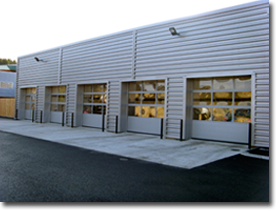
This panel construction drastically improves the door’s insulation value. Whilst many sectional overhead doors will usually achieve an insulation value of around 0.5 W(m²)K, our insulated sectional overhead doors provide a much higher insulation value of 1.1 W(m²)K. This improvement can reduce heat loss considerably.
Calculating the ROI for 2026
For businesses planning capital expenditure for 2026, the case for upgrading to an insulated roller shutter door is straightforward and based on calculable return on investment (ROI).
Consider a single loading bay door in cold weather conditions:
- Cost: Calculate the annual cost of heating the volume of air lost through a non-insulated door. This cost is rising every year due to volatile energy markets and carbon taxes.
- Insulation: Determine the reduction in heat loss achieved by the lower U-value of the new door.
- Cycle: If the new door is also high-speed, the reduced ‘open time’ further accelerates the savings.
The cost of investing in an insulated door is typically offset by energy savings within a relatively short period, often 2 to 5 years, depending on the number of doors and energy prices. After that period, the savings contribute directly to the business’s bottom line every year.
Extra Benefits of Insulated Roller Shutters
While energy conservation is the primary driver for investing in insulated door solutions, the dense, double-skin construction of the insulated roller shutter provides crucial secondary benefits for businesses:
- Noise reduction: The foam insulating core acts as an acoustic damper, significantly reducing external noise (traffic, machinery) and muffling internal operational noise, creating a quieter, more compliant working environment for staff.
- Condensation control: In environments where temperature differentials are extreme (e.g., heated warehouse air meeting a freezing cold, single-skin door), condensation and icing can occur. An insulated door maintains a higher surface temperature on the interior side, preventing moisture build-up and associated safety hazards.
- Security and durability: The thicker, multi-layered panel construction offers a more robust barrier against forced entry than a standard shutter, enhancing the overall security of the premises.
Future Planning: Sustainability and Compliance
As global and national energy efficiency mandates tighten towards 2026, operational sustainability is no longer optional. Investing in insulated door solutions is important for:
- Lowering the carbon footprint: Direct reduction in energy consumption has a direct link to reduced carbon emissions.
- Achieving accreditation: Contributing positively to building energy performance metrics required for compliance and green building certifications.
In the current economic climate of rising costs and greater scrutiny on environmental responsibility for all types of businesses, upgrading to insulated roller shutter doors is a clear win. It’s an investment that pays for itself through reduced utility bills, while simultaneously providing increased security, noise mitigation, and a more comfortable working environment for staff.
Don’t let your profits disappear as wasted heat through outdated doors. Make the smart switch and secure your energy efficiency for the years to come. Contact our team to discover your potential energy savings and ROI from upgrading to insulated roller shutters.